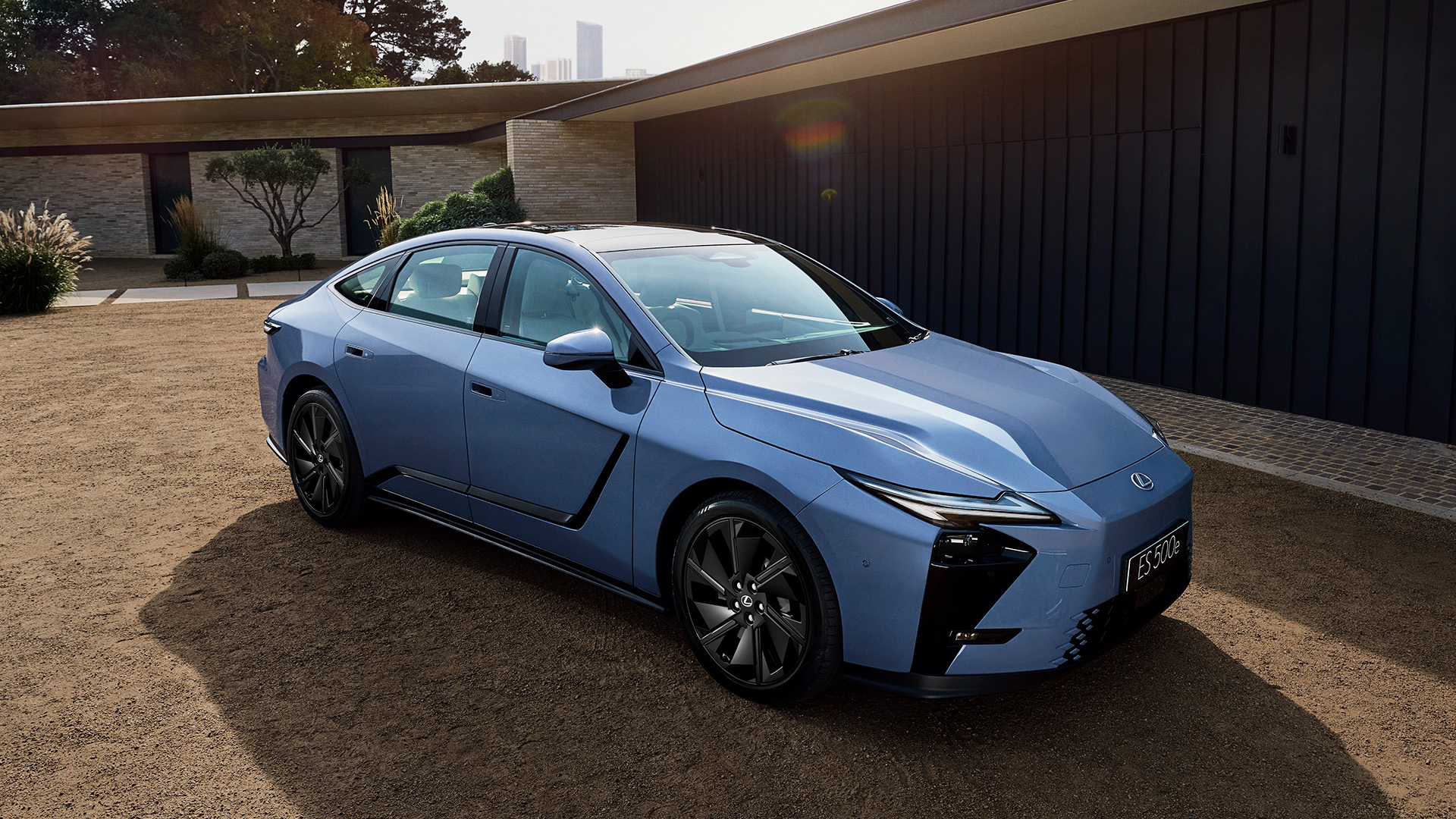
The Lexus Sedan Range: ES 300h vs LS 500h Compared
Choosing a Lexus sedan in Australia has never been simpler, or more interesting. The current sedan range comes down to two nameplates: the all-new ES and the flagship LS, both offered in hybrid form. Same badge, very different cars.
The all-new ES 300h continues the Lexus hybrid legacy in a completely redesigned eighth-generation body, arriving in Australian showrooms in late 2026. The LS 500h has been the brand's hand-crafted flagship since 2018 and still sets the ceiling on what a Lexus sedan can be. If you're weighing one against the other, here's how they compare on the specs, the drive, the cabin and the price.
The Lexus Sedan Range in 2026
The Australian sedan lineup is two models, and both are electrified. The medium ES sits below the flagship LS, offering a hybrid drivetrain (ES 300h) alongside two new battery-electric variants (ES 350e and ES 500e) that launched earlier in 2026. The LS is hybrid-only in Australia, with the LS 500h available in F Sport and Sports Luxury trims.
For buyers deciding between the two hybrid Lexus sedans, the choice is less about the hybrid technology itself (both are proven Lexus systems) and more about how much car, how much cabin and how much presence you want.
Lexus ES 300h at a Glance
The all-new ES 300h combines a 2.5-litre four-cylinder petrol engine with the sixth-generation Lexus hybrid system, sending 144kW combined to the front wheels through an e-CVT. Fuel consumption is claimed at 4.5L/100km on the WLTP cycle, with 103g/km CO2. Zero to 100 km/h takes 7.7 seconds making it quicker 0-100 km/hr than the outgoing model and more fuel efficient.
The car is 170mm longer, 55mm wider and 110mm taller than the outgoing ES, with 80mm added to the wheelbase. That translates to noticeably more rear-seat space and a more planted stance on the road.
Inside, the eighth-generation ES marks a big step. A 14-inch central touchscreen replaces the previous 8-inch unit, paired with a new 12.3-inch digital instrument cluster running the Lexus Arene operating system. Three trims are available: Luxury, F Sport and Sports Luxury. Pricing starts at $84,077 drive away* for the ES 300h Luxury.
"It is the nicest car I have EVER driven."
Meon Nehrybecki, Dealer Principal, Lexus of Parramatta
Lexus LS 500h at a Glance
The LS 500h is the Lexus flagship, built around a 3.5-litre V6 petrol engine paired with the brand's Multi Stage Hybrid System for a combined 264kW. Rear-wheel drive is standard, with fuel consumption around 6.6L/100km and a 0-100 km/h time of 5.4 seconds.
At 5,235mm long, 1,900mm wide and 1,450mm tall, the LS is around 350mm longer than the new ES and considerably lower-slung, with a 480-litre boot and a proper flagship footprint. Two Australian trims are offered: F Sport at $217,157 (a firmer, more driver-focused setup) and Sports Luxury at $222,872 (the full limousine treatment, with executive rear-seat options). Both prices are drive-away*
What sets the LS apart isn't horsepower. It's the finish. Hand-quilted leather, optional Kiriko cut-glass door trims, Takumi craftsmanship on details most owners will never notice consciously. It's the car Lexus builds when the brief is "no compromise."
ES Hybrid vs LS Hybrid Head-to-Head
|
Specification |
Lexus ES 300h |
Lexus LS 500h |
|
Engine |
2.5L four-cylinder + hybrid |
3.5L V6 + Multi-Stage Hybrid |
|
Combined power |
144kW |
264kW |
|
Drive |
Front-wheel drive |
Rear-wheel drive |
|
Fuel consumption |
4.5L/100km (WLTP) |
6.6L/100km |
|
0–100 km/h |
7.7 seconds |
5.4 seconds |
|
Length |
New 8th-gen (larger than previous) |
5,235mm |
|
Boot |
Sedan-standard |
480L |
|
Infotainment |
14-inch touchscreen, Arene OS |
Lexus Multimedia |
|
Trims (AU) |
Luxury, or Enhancement Pack |
F Sport, Sports Luxury |
|
Price (before on-road costs) |
From $84,077 Drive away* |
$217,157 – $222,872 Drive away* |
Performance and Powertrain
The LS 500h has almost twice the combined power output of the ES 300h and runs a V6 instead of a four-cylinder. Sending it to the rear wheels through the Multi Stage Hybrid transmission also gives the LS a different driving character: quieter under load, more effortless on freeways, and with the sort of stepped acceleration Lexus has tuned to feel like a traditional automatic rather than a CVT.
The ES 300h is lighter, front-wheel drive and tuned for daily efficiency. It won't outrun the LS, but a 7.7-second sprint is quicker than the outgoing model and comfortably quick enough for real-world driving.
Cabin, Comfort and Craftsmanship
The new ES has closed the cabin gap significantly. A larger 14-inch touchscreen, upgraded materials and the extra rear-seat room from a longer wheelbase all move the ES closer to what the LS has always offered. It's a genuinely quiet, refined cabin.
The LS still wins on sheer presence and finish. The rear seats in Sports Luxury spec are limousine-grade, with reclining, massage and ottoman functions on certain configurations. If you're being driven as often as you drive, the LS is built for it in a way the ES doesn't try to be.
Technology
Both cars share the newest generation of Lexus Safety System+, with Pre-Collision System, Lane Tracing Assist, Blind Spot Monitoring and Adaptive Cruise Control. The all-new ES introduces the new Lexus Arene operating system and a redesigned voice assistant, along with wireless Apple CarPlay and Android Auto.
The LS carries the previous-generation Lexus Multimedia system, which is still capable but doesn't feel quite as current as what's now in the ES. That's a first for the sedan range: on infotainment, the newer ES is ahead of the flagship.
Efficiency and Running Costs
The ES 300h's 4.5L/100km claim gives it a clear efficiency edge, roughly 30 percent better than the LS 500h's 6.6L/100km. For high-kilometre drivers, that difference adds up over a few years of ownership. Both cars use the Lexus hybrid architecture that charges as you drive, so there's no plug involved and no charging infrastructure to think about.
Service intervals are 12 months or 15,000km for both models, and both are covered by the Lexus warranty. The ES comes with Encore Signature, while the LS comes with Encore Platinum.
Price and Positioning
The pricing tells the clearest story. The ES 300h Luxury starts at $84,077 drive away*. The LS 500h sits at the flagship end of the range: $217,157 for the F Sport and $222,872 for the Sports Luxury, drive away*. For that difference, you're paying for hand-finished materials, more power, a bigger footprint and the coach-built feel of a top-tier limousine.
Which Lexus Sedan Should You Choose?
If you want a modern luxury sedan that fits comfortably in Sydney traffic, uses very little fuel and comes with the newest Lexus cabin technology, the all-new ES 300h is the pick. It's the volume car in the sedan range for a reason.
If you want a car built to a different standard, meant for long-distance touring and executive travel, and that feels genuinely rare on the road, the LS 500h is what Lexus makes when cost is a secondary concern. Australia is also one of the last global markets still offering the LS, so current stock is worth acting on if it's the car you want.
Buyers who want the ES look but with the extra performance of an EV should also consider the ES 500e (252kW dual-motor AWD) or the ES 350e (167kW single motor). Both were the first to launch in the new ES range and are already in showrooms at Lexus of Parramatta.
See the New Lexus Sedan Range at Lexus of Parramatta
The all-new ES is in our showroom now at 10 Church Street, Parramatta, alongside the LS 500h and the wider Lexus range. Book a test drive to sit in both and feel the difference for yourself. Our team can also walk you through the choice between the ES 300h hybrid and the new ES 350e and 500e electric variants if you're weighing hybrid against battery electric.
Frequently Asked Questions
How many sedans does Lexus sell in Australia?
Two. The medium ES and the flagship LS. The ES is available as a hybrid (ES 300h) or battery electric (ES 350e and ES 500e). The LS is offered as a hybrid (LS 500h) in F Sport and Sports Luxury trims.
What's the difference between the Lexus ES and LS?
The ES is a medium sedan positioned as the accessible executive Lexus. The LS is the flagship: larger, more powerful, hand-finished, and priced accordingly. The ES is a comfortable luxury commuter. The LS is a chauffeur-grade limousine.
Is the Lexus ES 300h front-wheel drive?
Yes. The Australian ES 300h drives the front wheels through an e-CVT. Rear-biased all-wheel drive is available in the ES 500e electric variant, not the hybrid.
Which Lexus sedan is more fuel efficient?
The ES 300h, at a claimed 4.5L/100km (WLTP). The LS 500h returns approximately 6.6L/100km depending on driving conditions.
Is the Lexus LS being discontinued?
The LS 500h continues in Australia in F Sport and Sports Luxury trims, and Australia is one of the last global markets still offering it. Lexus has signalled that the current fifth-generation LS is likely the last of the traditional flagship sedan, so if you want one, now is the time to buy. Contact Lexus of Parramatta to check current stock and delivery timing.
When can I test drive the new ES 300h hybrid at Lexus of Parramatta?
The hybrid ES 300h is available in Australian showrooms now, following the launch of the ES 350e and ES 500e electric variants earlier in the year. Contact our sales team on 02 9204 6520 for the latest arrival timing.